Friday, 21 February 2014

Chemistry @ Artfriend

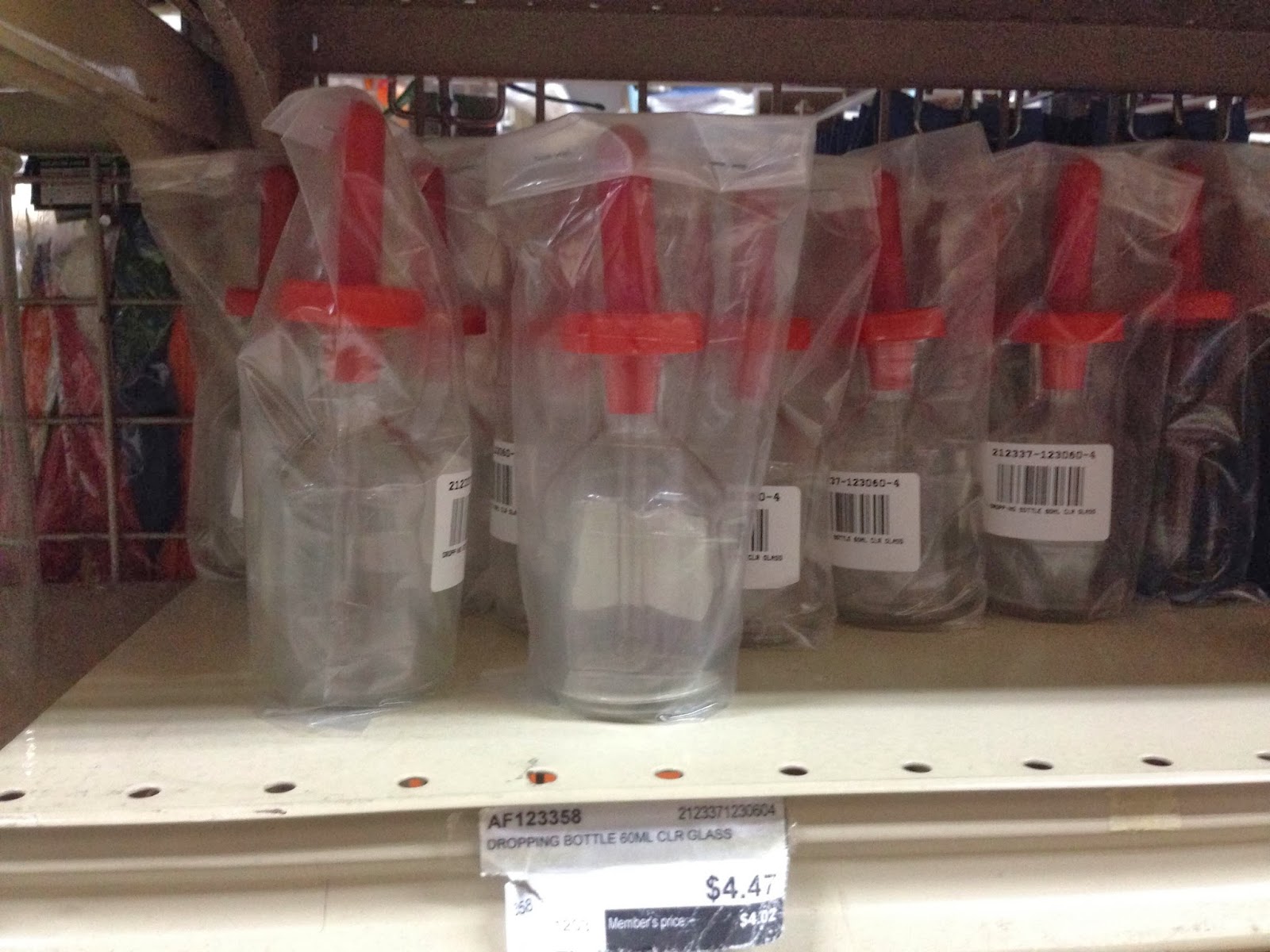
Since I will be starting on building the distiller during project week, I do not have much time left before work check. Therefore after some research done, I found out that Art friend sells some chemistry glasswares so I decided to make a trip down after school. Yes Art friend does sell some chemistry glasswares that are quite basic but at least they have more varieties as compared to Overjoy near school. They even have flask, beakers and test tubes in different sizes. This trip was useful because I know what they offer and the price range so I can roughly gauge the budget and what items I can purchase from Art friend if needed. Saturday morning I would be visiting a warehouse that sells the chemistry glasswares and apparatus which are more to laboratory glasswares which are commonly sold at art markets.


Thursday, 20 February 2014

Chemistry glassware study

As I am dropping by a warehouse that sells the chemistry glasswares I am looking for, I've decided to study a little on chemistry glasswares. To find out the names and their function. I also need to know what are the glasswares or apparatus needed to set up a distiller. These glasswares also have to be Chemical-resistant glass.


Here are some basic glasswares that are usually needed and common :


Graduated cylinders : cylindrical containers used for volumetric measurements.


 Condensers are used to cool hot liquids or vapors


3 Neck Bottom Boiling Flask


Funnels are used to get materials through a narrow opening


A distilling flask is a round bottomed laboratory apparatus. The main purpose of a distilling flask is to separate two different liquid components that have different boiling temperatures


A flask with similar uses as the round-bottom flask, but with a flat bottom that allows it to stand on a level surface


Flask are narrow-necked glass containers, typically conical or spherical, used in a laboratory to hold reagents or samples

Beakers are simple cylindrical shaped containers used to hold reagents or samples


The round bottoms on these types of flasks allow more uniform heating and/or boiling of liquid. Thus, round-bottom flasks are used in a variety of applications where the contents are heated or boiled. Round-bottom flasks are used in distillation by chemists as distilling flasks and receiving flasks for the distillate


Test tubes are widely used by chemists to hold, mix, or heat small quantities of solid or liquid chemicals


Reagent bottles are containers made of glassplasticborosilicate or related substances, and topped by special caps or stoppers and are intended to contain chemicals in liquid or powder form for laboratories and stored in cabinets or on shelves.


There are many more glasswares and apparatus, but these are the main ones that are commonly used. More studies will be added if my outcome needs the use of certain glassware or apparatus. I love chemistry, wished I studied harder when I was younger in chemistry class. Rather than breaking test tubes and pretending that I had a gun which was actually a distilled water bottle and going around to "kill" classmates with it. 

Fractional Ideas

Since I have decided to build a fractional distiller, I was thinking of designing it out of its usual conventional way. But at the same time, it has to functions in the science way. Over the weekends, I chanced upon a few interesting designs, some are not distillers but perhaps I can create some ideas out of them. Also, I would like to use glasswares/glass for the designer or the distiller to be in sync with the ideal art direction of the outcomes. Moreover, glass are transparent and see through, it allows my user to see through the glasswares to experience the process and also keep them curious. 


Mini distillator by Michal RudzkiAs the distiller requires fire or a heat source, this distiller design shows a good choice of designing with the heat source but not having it exposed. Because with the fire or heat source exposed, it does not look as good and portable, plus it might be dangerous for the users. Candles are a good choice too, because it is slightly settle. 


An idea of a really small and portable distiller which can be considered to be part of the fractional distiller which I am doing to come out with designs. 

 I also bumped into some interesting coffee machines that uses the distillation idea that is designed to look like chemistry glasswares or something that can be found in laboratory labs. 


Laboratory espresso machine by david budzik and adi schlesinger

The ‘laboratory espresso machine’ conceived by israeli designers david budzik and adi schlesinger celebrates coffee with a scientific aesthetic. the machine was created to achieve perfect timing required for the production of a single portion of perfect espresso, bringing obtainable expert process to the average user. the device works with espresso capsules in order to allow use by beginners as well as the more experienced audience. the machine employs physics laws known a the ‘venturi effect’ and thermo dynamics, and the capsule punching mechanism is derived from the world of automatic weapons. the contraption is made from reinforced glass and polymers in conjunction with an aluminum frame structure and features a classic-style barometer.


Cafe balao coffee maker brews with chemistry kit carafes


portugal based designer davide mateus has reimaginged the coffee-making process as a scientific experiment, creating a machine that looks to be straight out of a laboratory. made from two, delicate blown-glass flask incorporated with an electric heater at its base, the transparent system allows the user to visualize the brewing procedure and prepares in just a third of the time than an alcohol-fueled machine. based on the brief ‘coffee made at home’, mateus explores the root of why people choose to self-brew, and incorporates an entertaining and fun approach to the visual aesthetic. ‘cafe balao’ rethinks the caffeine kick, allowing coffee connoisseurs and casual drinkers alike to play the role of chemist.


CHEMISTRY CLOCHE 


Liberated from the chemistry lab, tubes and flasks of machine-blown glass are assembled into lighted sculptures worthy of a mad scientist. Each fully wired piece is set on a wooden base beneath a blown-glass cloche.


All these examples and visuals would be good ideas for me to expand on, or as a base to start off. These products uses the look of glasswares found in the chemistry labs which is something I want to achieve for the look of my final outcome.

Kate Mclean : Sensory Maps (Smell)

Kate Mclean has so many interesting works, I haven't got time to go through all of her works. Especially these smell maps that looks so visually good that makes me curious. Its amazing how she created visuals out of smell, well that is the way I interpret it. 


Then I came across her work which is the smell map done in paris, which reminds me of using the sense of smell to trigger memories. Basically the audience were invited to: 
SMELL a scent from any of the bottles
RECALL what it reminds you of 
WRITE the place and/or feeling you associate with the smell
STICK your notes on the board near to the bottle of scent


I like the idea of forcing or encouraging people to enhance the usage of their senses, which in this case is the sense of smell. This project encourages people to dig out a memory or a relationship they have with a location just based on recalling the space with the help of scent. The idea is almost similar to my project, which is to link experience and memory done. Her works are so inspiring and I like how they are not so direct and the many approaches she takes to get her message sent.

Kate Mclean : Sensory Maps

Last saturday morning while doing my research on 5 senses design, I chanced upon Kate Mclean. Kate is a a sensory researcher, designer, photographer and a lecturer. She produces works that challenges the paradigm that graphic design can rely on the visual. And she believes that since we have 5 senses, we should use them. I was so happy to learn about someone across the universe is doing something similar to my project, or at least a project based on the 5 senses and it got me so excited.

Her works are mainly sensory maps and revolves around the usage of senses of cause. I found her blogging space, http://sensorymaps.blogspot.sg which was full of interesting ideas and experiences she has learnt about and she document her experience in that blog. Most of her post were a concentration on the sense of smell. Kate create maps that utilise the usage of senses and she categorised them. She has a few smell maps done but not forgetting the other senses, so she had taste, view and tactile maps as well. They really sound very interesting to me and they make me curious. So I took a deeper look into her works, some sensory maps based in EDINBURGH : 

1. Taste map


"Scotland, a beautiful small European country, is

blissfully free of ageing populations. The Scots die young and don't cling on their pensions for decades like Japanese centenaires, sucking the blood of younger generations. What's their secret? The Scottish Diet, an age-old combination low in fresh fruits and vegetables and high in confectionery, fat enriched meat products, sweet and salty snacks accompanied by generous amounts of sugary drinks and alcohol.


"The golden rule of the Scottish diet is that fat, sugar and alcohol should each account for at least 30% of your daily calorie intake. You may eat one serving of fruit per week, preferably as jams or preserves."

2. Tactile map


TACTILE NEIGHBOURHOODS
Neighbourhoods have distinct identities, boundaries, often built at different times, for different city expansion projects they have their own textures and "feel".


In time these neighbourhoods become communities with commonalities, distinctive characterisitics and subculture. The phyisical textures of the Old Town include rough-hewn rock and cobbles, the New Town is smoother. The emotional characteristics can be described in similar terms.

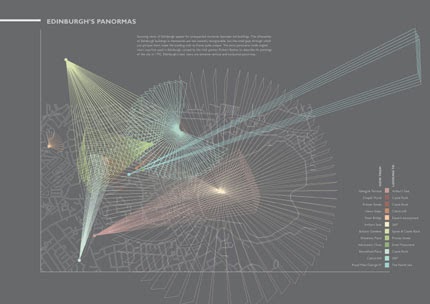
3. View Map 


PANORAMIC EDINBURGH VIEWS
Stunning views in Edinburgh appear for unexpected moments between tall buildings. The silhouettes of Edinburgh buildings in themselves are not instantly recognisable, but the small gaps through which you glimpse them make them unique.

4. 


Auld Reekie emits a plethora of scents and smells; some particular to Edinburgh, some ubiquitous city aromas. It is the combination of smells, and how they are distributed by the prevailing south-westerly winds that make scents and smells city-specific.

Coloured dots indicate the point of origin of the scents, the contour lines show where the smells blow to in the wind.
Kate is truly inspiring and all of her works are so interesting, keeping me curious. I am so glad that I chanced upon her website, now I've gained more perspective and interest for my project.A supporting quote to end off, : "Our most precious moments of travel are taken home not through our luggage, not through our cameras… but through our senses". Mendiratta 2010. 

Study : Methods of extracting essential oil & scent

Since I 've decided to do the chemistry way. I've got to study up on what are the science way of extracting and collecting scent. Therefore I went on with finding out the ways to extract smell and along the way I bumped into brilliant and interesting ideas.

I also studied graphs and drawings of distillation set ups so as to understand it better because the last time I've studied chemistry was a few years back. Besides, my memory has always not been brilliant and hey it's chemistry we are talking about.

Distillation:

The vast majority of true essential oils are produced by distillation. There are different processes used, however. In all of them, water is heated to produce steam, which carries the most volatile chemicals of the aromatic material with it. The steam is then chilled (in a condenser) and the resulting distillate is collected. The Essential Oil will normally float on top of the Hydrosol (the distilled water component) and may be separated off.

Steam Distillation

True Steam distillation uses an outside source of steam which pipes the steam into the distillation unit, sometimes at high pressure. The steam passes through the aromatic material, and exits into the condenser.


Hydrodistillation

The botanicals are fully submerged in water, producing a "soup", the steam of which contains the aromatic plant molecules. This is the most ancient method of distillation and the most versatile. It's the method most often used in primitive countries. The risk, of course, is that the still can run dry, or be overheated, burning the aromatics and resulting in an EO with a burnt smell. Hydrodistillation seems to work best for powders (ie, spice powders, ground wood, etc.) and very tough materials like roots, wood, or nuts.

Water & steam distillation

A water and steam distillation arrangement can be compared to a kitchen steamer basket, with the botanicals supported in a "basket" over boiling water, thus exposing the plant material only to the rising steam vapors. This is the best method for distilling leafy materials, but doesn't work well for woods, roots, seeds, etc.


Carbon Dioxide Extraction

When CO2 (carbon dioxide) is subjected to high pressure, the gas turns into liquid. This liquid CO2 can be used as a very inert, safe, "liquid solvent." which will extract the aromatic molecules in a process similar to that used to extract absolutes (above.) The advantage, of course, is that no solvent residue remains, since at normal pressure and temperature, the CO2 simply reverts to a gas and evaporates.
CO2 extraction has given us essences of some aromatics that don't yield essential oils, Rose Hip Seed, and Calendula, for examples. In my experience (or opinion!) if the same essential oil is available both as a steam distilled EO and a CO2 extracted essence, the CO2 seems to have a richer, more intense scent, since more of the aromatic chemicals are released through this process. 

Cold Pressing

We are all familiar with the spray of orange essential oil that can be released by scoring or zesting the skin of the fruit. The cold pressed citrus oils are commercial produced just this way, by machines which score the rind and capture the resulting oil. Although many citrus oils are also produced by steam distillation, they seem to lack the vibrancy of the cold pressed oils.

http://www.naturesgift.com/extraction.htm


My main aim is actually to find out ways to collect scent using the fractional distillation idea. However I found out that there are a few ways of distillation and the same method is being used not only for collecting scent but also to collect alcohol, which is not the direction I am going for. But I believe a study on these methods will help me understand better and maybe I can adopt the method and infuse into the design of my outcome.

I also found traditional chemistry way of distillation and alternatives that are diy and can be done at home. They would help me understand better and simplify the process.


I also found out another method of extracting scent, that uses water as the main element.

In theory, the process of steam distillation is simple enough: Generate steam, direct it through the biomatter to be extracted, condense it, and collect it. In practice though, steam distillation is a subtle art, and the details of equipment and technique are very important. 


The laboratory steam distillation setup as a reference 


The catnip extraction

The catnip and water goes in the bottom of a big pot, with a cup placed on top. The lid is really the key component here; by simply turning the lid of the pot upside down, the vapors will condense and drip down from the center, collecting in the cup below. By filling the top of the lid with ice water, the vapors are condensed very efficiently.


An idea of how to Build a Still Vodka Distiller


A very basic idea of how to get distilled water out of a DIY method


After studying all of the extraction ways, I noticed that they require a heat source and for the laboratory set ups, most of them use fire to heat up. Heating up is a must for distillation which is one of the obstacles I am currently facing. Because the usage of fire for my outcome would not only look raw but also not very convenient for users as my outcome is supposed to be interactive. 


Cracking up my brains.

Wednesday, 19 February 2014

Case study : Kentaro Shihaku aromalize project

"Aromalize Project is a realtime blending essential oil machine which is analysing user's current situation from their SNS, proposing the suitable aroma oil to them, and showing the process of blending over the pc browser. "Aromalize" you is exactly a world's first challenge."


1. The website for users to log in onto either Facebook or twitter 


2. Personalisation 


3. The contents of the bottle and what makes up the customisation 


Another video that explains the function of the aromalize project in a more fun and quirky manner


1. Access to user's social media platform, either Facebook or Twitter


2. Aromalize project highlights keywords and analyses user's mood and emotions


3. Selected words and what the user is in need of


4. Customisation of essential oil for user begins using the machine


5. Final product of essential oil for the user


The aromalize project is a blending of customised essential oil according to the user's mood based on social media updates and status. Since my outcome is linked to social media, I decided to use Kentaro Shihaku's project as a case study because his work is inspiring and innovative. So I broke down the process of his project by illustrating it out and try to make mine similar or close to the concept.